 Elmer
Elmer
EV charging basics: what you need to know
Charging an electric car is easy once you know a few basic terms. Here are the ones that matter most for time and cost.
kW and kWh
kWh is energy: how much electricity goes into the battery. kW is power: how fast it goes in. In theory, a 60 kWh battery can go from empty to full in one hour at 60 kW. In practice, the car lowers the power along the way, so it takes longer.
AC or DC
Home chargers and street chargers supply alternating current (AC). The car's built-in charger converts it to direct current, usually at no more than 11 kW. Rapid chargers send direct current (DC) straight into the battery, from 50 kW to over 300 kW. AC is the cheap everyday choice. DC is for trips and for when you are in a hurry.
Charge to 80%
The car charges fastest when the battery is nearly empty. Above 80%, it gets much slower. The last 20% can take as long as the first 60. On a trip it is therefore often quicker to charge to 80% twice than to 100% once.
What makes up the price
The price at the charger can have several parts: a price per kWh, a price per minute, a start fee, and a fee if the car stays plugged in after charging. Some providers change their price every 15 minutes. Elmer converts it all into one price per kWh for a typical charge. That way you can compare providers.
Big price differences
Right now, rapid charging with the nationwide providers costs from 3.59 to 4.98 DKK/kWh. A 40 kWh charge costs 144 DKK with the cheapest and 199 DKK with the most expensive. At home at night, electricity costs around 1.28 DKK/kWh.
Cold weather
A cold battery charges more slowly. Many cars warm up the battery when you navigate to a rapid charger using the car's own navigation. In winter this can save you many minutes at the charger.
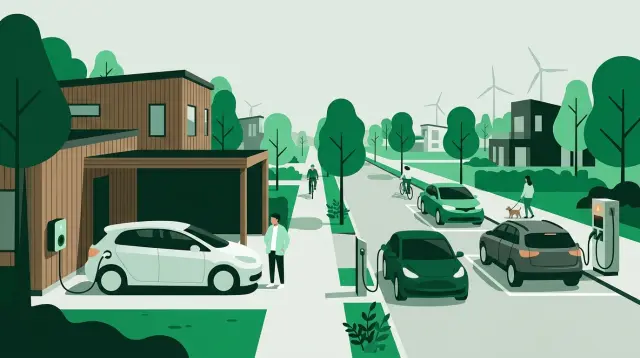 Home charger, street charger or rapid charger?
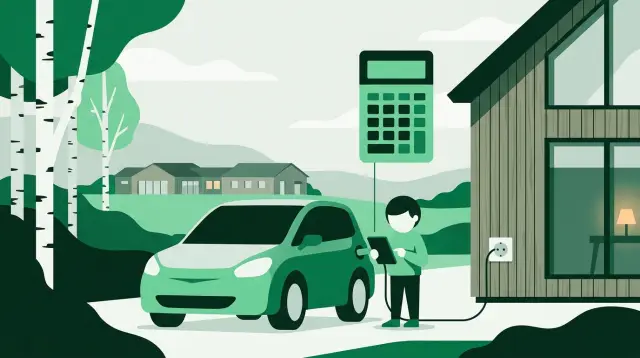 How Elmer calculates the charging price
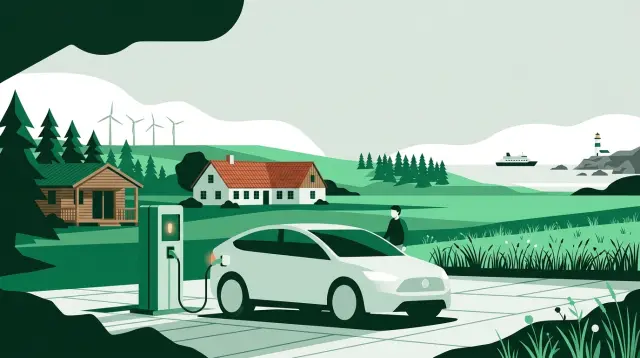 Why does EV charging slow down? The charging curve
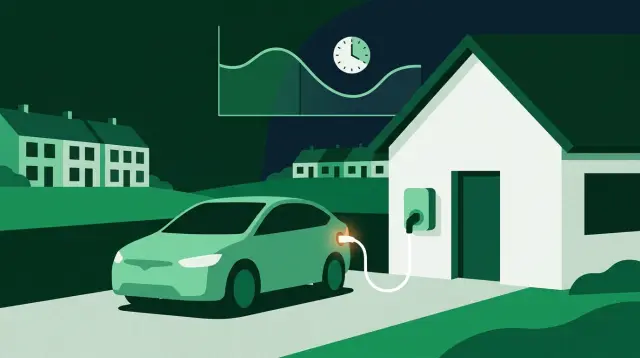 Smart charging and hourly electricity prices